
Opportunity Zone Research Parks: Map Buildings, Not Targets

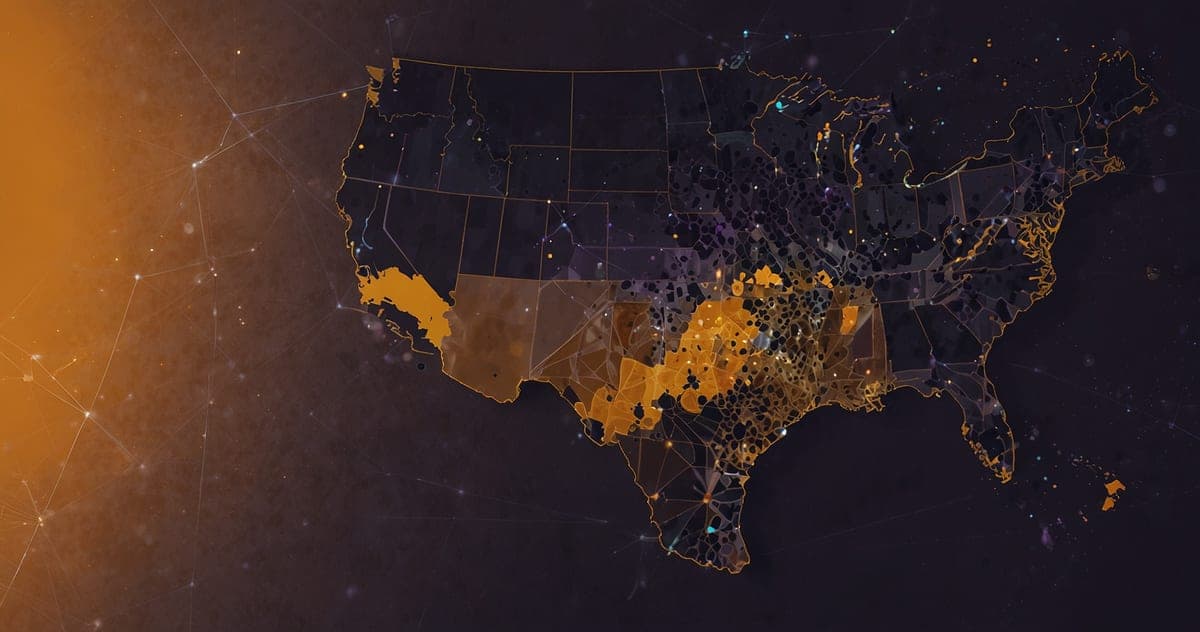
Opportunity zone research parks are university and institutional research campuses whose street address sits inside a designated Qualified Opportunity Zone census tract. From January 1, 2027, that status runs off a new map: Treasury and the IRS certified 6,576 tracts for a ten-year term, including 2,594 rural tracts, so a park that was in a zone in 2026 may not be in one next year. For a corporate scout, a park's zone status is a signal about who will finance buildings on that campus. It is not evidence that the companies inside are acquirable.
The tax and real-estate literature handles only the first fact, because it is written for fund sponsors and park directors raising capital, not for the person deciding whether a designated research park deserves a week of sourcing work.
What the 2027 opportunity zones map changed
The One Big Beautiful Bill Act sunset the 2018 designations at the end of 2026 and made the program permanent with rolling ten-year rounds. Brookings' summary of how OBBBA changed Opportunity Zones records the two changes that matter for institutional geography: the income test tightened to 70% of area median family income, down from 80%, and the provision that let governors nominate non-low-income contiguous tracts was repealed. That loophole put a fair number of research campuses and downtown innovation districts into the first map.
Governors worked a 90-day nomination window that opened July 1, 2026, with a 30-day Treasury extension available into late October, and could nominate up to 25% of eligible tracts in their state, per the Congressional Research Service FAQ. Treasury published the certified list on November 5, 2026, covering all 50 states, DC and the territories, per the Economic Innovation Group's data alert.
The arithmetic is the part to carry into diligence. The new map holds 6,576 tracts against 8,764 under the 2018 round, and only about 60% of the old tracts, 5,259 of 8,764, were fully eligible for redesignation. Any 2019 to 2026 page calling a campus an opportunity zone research park is describing a map that expires in seven weeks.
Why zone designation predicts buildings, not acquirable companies
Designation tells you a tract is about to get cheaper capital for physical assets, and the record on where that capital went is not ambiguous. Brookings' tract-level analysis of 7,174 designated tracts over seven years, summarized by Site Selection, found half of opportunity zone capital was invested exclusively in housing and 75% of investments included a residential component. The GAO reached the same conclusion, reporting that most Qualified Opportunity Fund projects are real-estate focused and that the effects of the original incentive remain largely unknown. Treasury's own working paper on QOF tax data puts the operating-business share of zone equity in the low single digits.
The honest read on a designated research park: it will probably get a new wet-lab shell, a parking structure and some apartments, and almost none of the incentive money will land in the companies you want to buy. Designation is a construction forecast: a reason to check back on a park's tenant roster in 2029, not a quality score on the roster today.
One second-order effect is worth tracking. New lab space changes which companies can physically stay in a region as they scale, which is why we treated Richmond's VA Bio+Tech Park as a park to track rather than a 2026 process. Buildings move a tenant list's composition on a three-to-five-year lag, not this quarter.
How to check a park against the certified tract list
You can verify any campus yourself in about ten minutes, and you should, because no official crosswalk from tracts to named innovation assets exists. The CDFI Fund publishes the certified designations as a downloadable spreadsheet keyed by 11-digit census tract ID.
- Take the park's actual street address, not the university's main address. Large campuses straddle tract boundaries, and the incubator building is often in a different tract from the main research block.
- Resolve that address to a 2020 census tract ID using the Census Bureau's geocoder.
- Search the CDFI Fund list for that tract ID. Present means designated from January 1, 2027. Absent means the park loses zone status at the end of this year, whatever its website still says.
- Note whether the tract is flagged rural. Rural tracts carry an enhanced incentive, which changes who builds there and how fast.
Run this before you quote a park's designation in an investment committee memo. It also catches stale claims: a park that entered the first map through the repealed contiguous-tract provision had no path to carry over.
When zone status should change your plan, and when to ignore it
Zone status earns a place in your sourcing sequence in three cases: your mandate is capital-equipment or facility-dependent, and a rural-flagged tract tells you where new production and lab capacity gets financed over the next decade; you are negotiating a joint venture or a sited pilot, where the tract affects your own cost basis; or you are mapping a corridor five years out rather than closing next year.
Ignore it in three others. If your mandate is a 2027 acquisition, screen the park's company list and never the tract map: a target's tax geography says nothing about whether it has shipped product or holds the IP you want. If you are comparing regions, zone density is a poor scoreboard, because the 25% nomination cap and governors' priorities mean the map reflects state politics as much as economic need. And if a park's only credential is its designation, that is a tell rather than a feature. We argued the general version in source the anchor, not the city brand; designation is the most quotable city-brand credential there is.
The practical rule: a tract ID is a filter on where capital will build, never a filter on who you can buy.
What an opportunity zone fund on the cap table does to your deal
An OZ fund holding equity in your target changes the negotiation in two ways. Qualified opportunity zone stock has to be acquired by the fund at original issue, directly from the corporation, solely in exchange for cash, under Treasury regulation 1.1400Z2(d)-1-1). You cannot buy into the benefit through existing shares from a founder or an earlier investor, so the structure is irrelevant on your side of the table. And because the largest piece of the investor's benefit depends on a long holding period, a fund three years into a position has a tax reason to resist an early exit, which shows up as price resistance or a push for an earn-out rather than a formal veto.
Add one question to your diligence list for any target inside a zone: when did the QOF take its position, and what is its holding milestone. The answer tells you whether you are negotiating with a seller or with a clock.
The park-by-park screens behind this map
A park's zone status is settled by a spreadsheet lookup. Who inside it is acquirable takes a different screen for each campus, because the mix of tenants, licensees, spinouts and branch offices differs park to park. Each of the US campus and district screens we have published separates the people who rent space from the companies you can buy.
| Park or district | State | The screen that post uses |
|---|---|---|
| Las Cruces OZ research park | NM | Who is acquirable inside a designated park |
| VA Bio+Tech Park, Richmond | VA | New wet-lab capacity as a tracking signal |
| UConn Tech Park | CT | The two layers you can acquire |
| Nebraska Innovation Campus | NE | Four pools, not one tenant list |
| K-State Edge District | KS | Tenants are not targets |
| SDSU Research Park | SD | Why a park is not a pipeline |
| JSNN, Greensboro | NC | Spinouts versus facility users |
| PIC MC, Germantown | MD | Activity checks on a life-sciences campus |
| uCity Square, Philadelphia | PA | Sourcing past the anchor university |
| FUEL and LSU, Baton Rouge | LA | Cohorts over leases |
| Knoxville innovation district | TN | Where real companies hide in tenant lists |
| San Marcos, Austin corridor | TX | The materials layer under a corridor |
If a dozen campuses is more screening than your team has hours for, Find Startups does that job: give it the industry and region in your mandate, and it returns companies vetted as active and relevant, not a roster of everyone holding a lease.
What the new reporting rules give scouts in 2027
Starting with tax years beginning after December 31, 2026, Qualified Opportunity Funds and QOZBs face annual reporting on asset values, employee counts, property type and the tracts they invested in, with Treasury required to publish aggregated and some tract-level data. The technical analysis of the proposed regulations sets out the schedule. No such dataset exists today: employee counts and property type by tract, published rather than inferred.
For a scout, the use is narrow and real. Once the first filings publish, you can tell a tract where funds bought apartment buildings from a tract where funds took equity in operating businesses, and rank parks by the second number. Until then, you are working from the 2018-round evidence, where the apartment buildings win most of the time.
FAQ about opportunity zone research parks
Which university research parks are in the 2027 opportunity zone map?
No agency publishes a list of research parks in the 2027 map, because designations are census tracts rather than named institutions. Geocode each park's street address and check the tract ID against the CDFI Fund's certified spreadsheet, for every campus you plan to cite after January 1, 2027.
Can I get the opportunity zone tax benefit by acquiring a company in a zone?
Buying an existing company or existing shares produces no opportunity zone benefit for the buyer. Treasury's rules require qualified opportunity zone stock to be acquired at original issue, directly from the corporation, solely in exchange for cash, so a secondary purchase from a founder or a prior investor falls outside the incentive.
Does an opportunity zone fund on the cap table block an acquisition?
An opportunity zone fund cannot block a sale on tax grounds, but it has a financial reason to slow one down, because the investor's benefit depends on a long holding period. Ask when the fund invested and what holding milestone it is working toward, then expect the answer to show up in price or in deal structure.
How do I tell a research park tenant from a real acquisition target?
A tenant rents space, a licensee holds rights to university IP under a contract, and a spinout owns a product and a cap table of its own. Only the third group is usually buyable, and the distinction is specific to each campus, which is why we score campus companies on relevance, activity and fit rather than on a tenant directory listing.
Does a rural opportunity zone designation change who builds in a park?
Rural tracts in the 2027 map carry an enhanced incentive, so a rural-flagged research park should see more aggressive facility financing than a comparable urban one. That affects construction timelines and future tenant capacity, and it still says nothing about which companies on the campus are active today.
The next step is narrow: pull the certified tract list, verify the three or four campuses already in your mandate, then spend the rest of your time on company-level screens instead of map work. Give Find Startups your industry and region, and Chibit returns companies vetted as active and relevant, so your week starts with a short list worth acting on rather than a tenant directory.
About Andy Chiang
Founder at Chibit
Andy Chiang is the founder of Chibit, a platform that helps corporate innovation, R&D, and M&A teams find active, relevant companies across global innovation ecosystems. He works with buyers who need short lists matched to a real mandate, not directory dumps, with particular focus on green economy, energy, and manufacturing across East Asia, North America, and Eastern Europe. Before Chibit, he spent over a decade in marketing, growth, and go-to-market for technology companies. He writes about operating leverage at Seeking Leverage and hosts Foreign Founders, a podcast and community for immigrant founders, operators, investors, and ecosystem partners. He is based in Brooklyn, New York.
You might also like

Northwest Arkansas tech startups: only one type is acquirable
Northwest Arkansas tech startups split into four entity types at the Arkansas Research and Technology Park. Only one is acquirable: here is how to sort them.

Las Cruces Opportunity Zone Research Park: Who Is Acquirable
Arrowhead Park is the Las Cruces Opportunity Zone research park. Here is how M&A teams sort its tenant roster into acquirable aerospace and ag-tech targets.
San Marcos Texas startups: the Austin corridor's materials layer
San Marcos Texas startups cluster in materials, batteries, and diagnostics at Texas State's STAR Park. How acquirers read the roster as a sourcing filter.
Request a Global Innovation Scout demo
Get 3–5 vetted startups, technologies, or partners from ambitious tier 2/3 ecosystems, matched to your thesis.
Request a Demo